
In the Boeing Aviation Hangar at the Udvar-Hazy Center, most aircraft feel historic. The SR-71 Blackbird feels urgent—like it’s paused mid-mission. Even roped off under museum lights, it looks built for one thing: get in, get the intelligence, get out—before anyone can react.
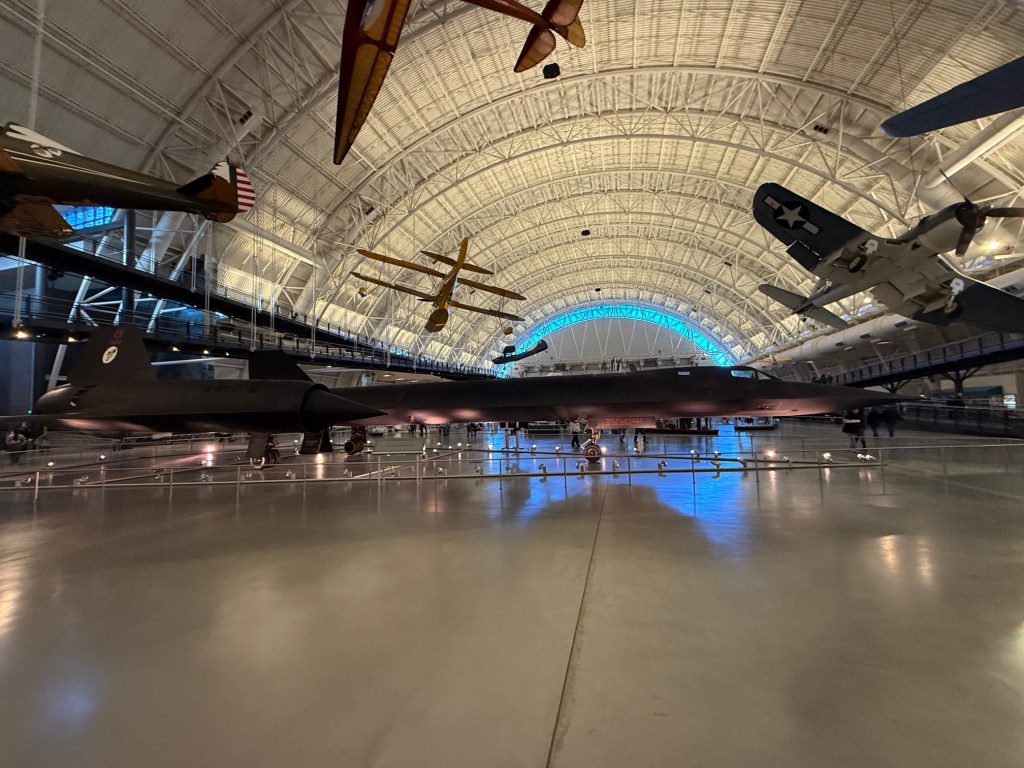
The first thing you notice is that it doesn’t resemble a normal airplane. The fuselage blends into the wings. The nose flares into wide “cheeks.” Two massive engine nacelles sit outboard like hardware bolted onto a dart. From the front, it looks broad-shouldered and predatory; from the side, it’s all length and intent.
Those “cheeks” are the chines, and they’re not styling. They generate lift and stability at extreme speeds and help the whole airframe behave like a single, integrated lifting body. The nacelles tell an even bigger story: at Mach 3+, the engine is only part of propulsion. The inlets (with their movable spikes) had to manage shock waves, slow the air, and feed it to the engine in a usable state. At that speed, airflow is something you control, not just something you fly through.
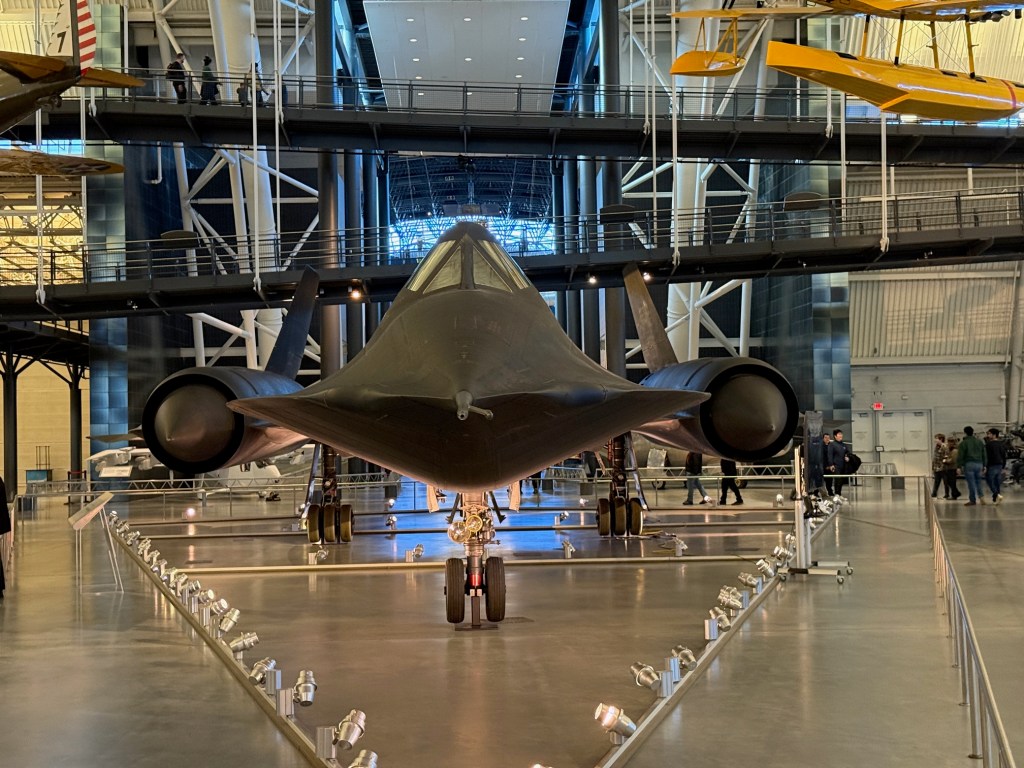
Then there’s the quiet enemy the Blackbird was built around: heat. Sustained high-speed flight turns the airframe into a thermal problem, which is why the SR-71 leaned heavily on titanium and why its dark finish became iconic. One famous side effect of designing for expansion is that the Blackbird could leak fuel on the ground, sealing up more tightly only after it heated and “grew” in flight. It’s a reminder that this airplane wasn’t optimized for sitting still. It was optimized for being hot, high, and fast.
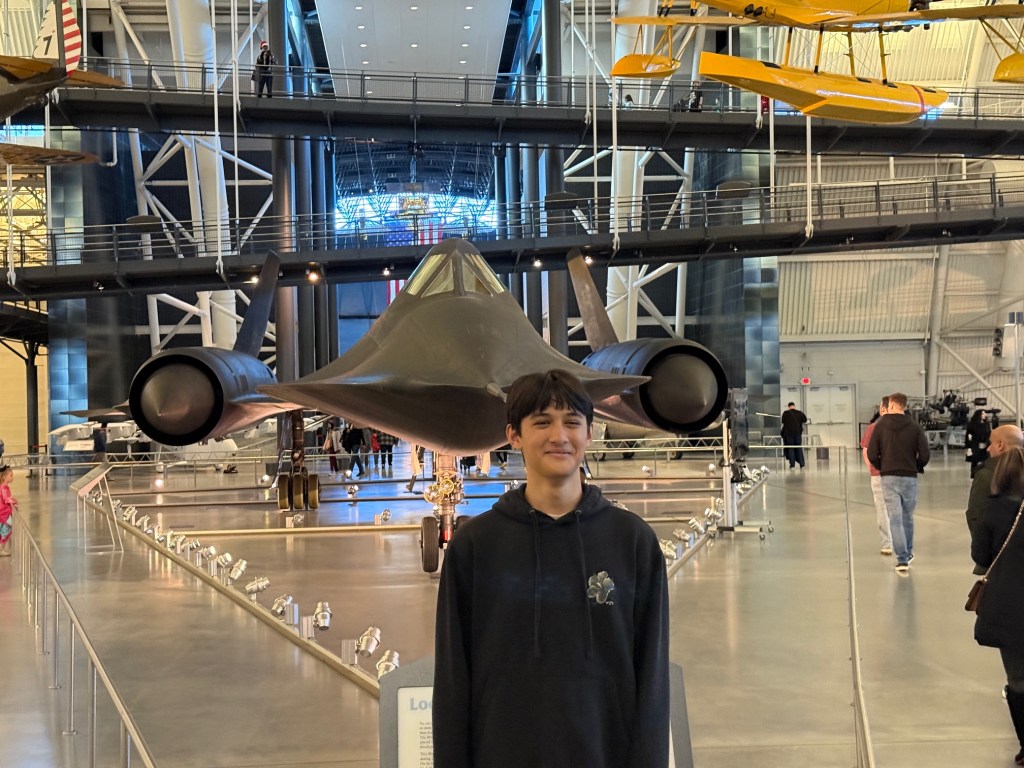
Unlike fighters that survive through agility or armor, the SR-71’s core defense was blunt: speed and altitude. If it was threatened, it could often accelerate and leave. That philosophy shaped everything about the aircraft, from its long, slender form to the complex inlet system that made sustained supersonic cruise practical.
Seeing the Blackbird at Udvar-Hazy works because of context. Surrounded by aircraft from every era, the SR-71 still looks like the outlier, less “airplane” than “boundary-pusher.” You walk away with the same thought it seems to project from every angle:
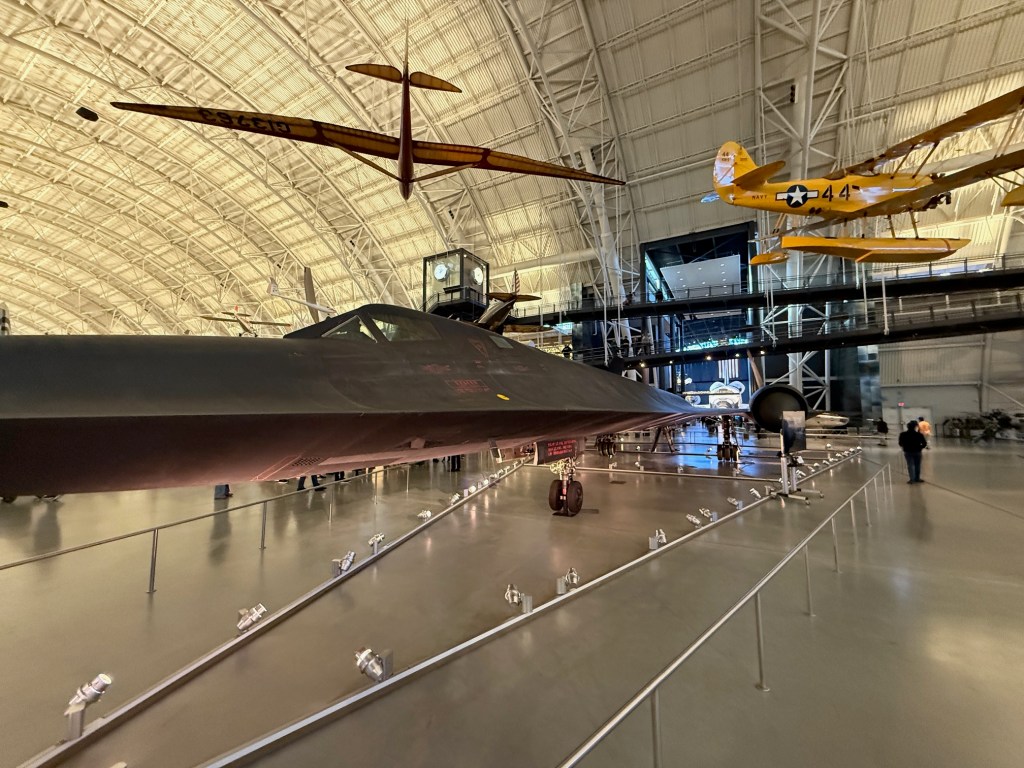
This wasn’t just built to fly. It was built to outrun the limits.
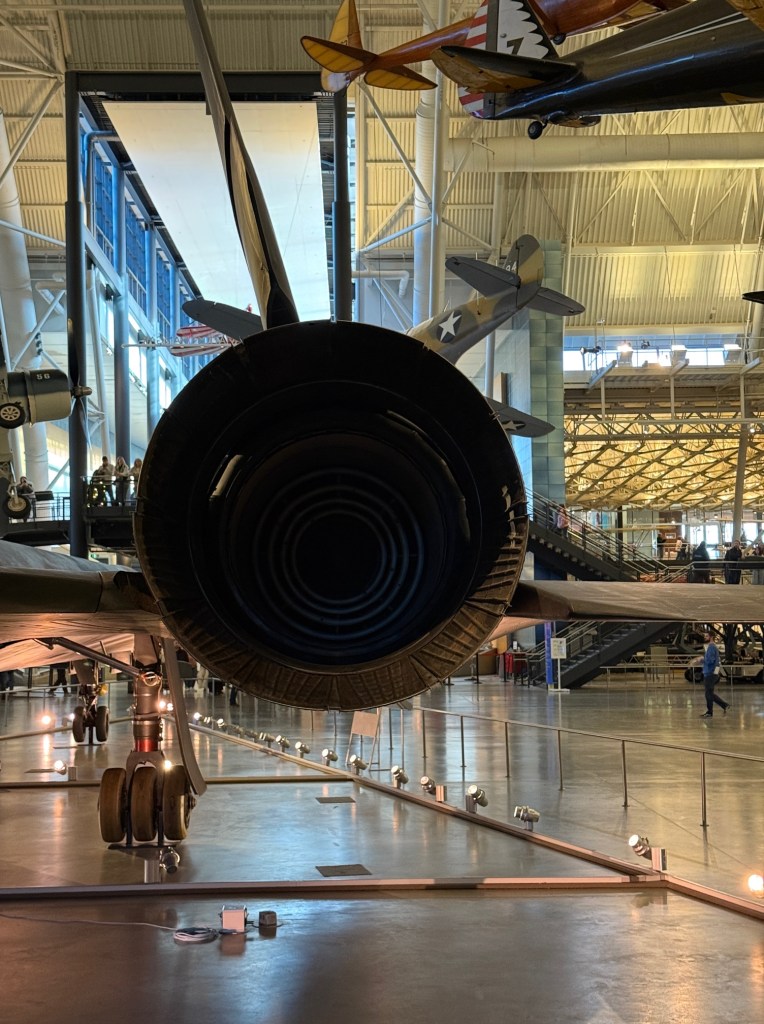
Oh and for those who like to look at the rear end, check this out….

 Astronomer Willy
Leave a comment