
After touring Mauna Kea, the biggest misconception I had to unlearn was that the summit is “a bunch of telescopes doing the same thing, just at different sizes.” In reality, Mauna Kea is more like a multi-wavelength research campus. Each observatory is tuned to a particular slice of the electromagnetic spectrum, a particular observing style (wide surveys vs. ultra-deep precision), and a particular scientific niche. The magic is how these niches overlap: one facility finds targets, another characterizes them, and a third observes the same physics in a different wavelength where dust, gas, or temperature tells a different story.
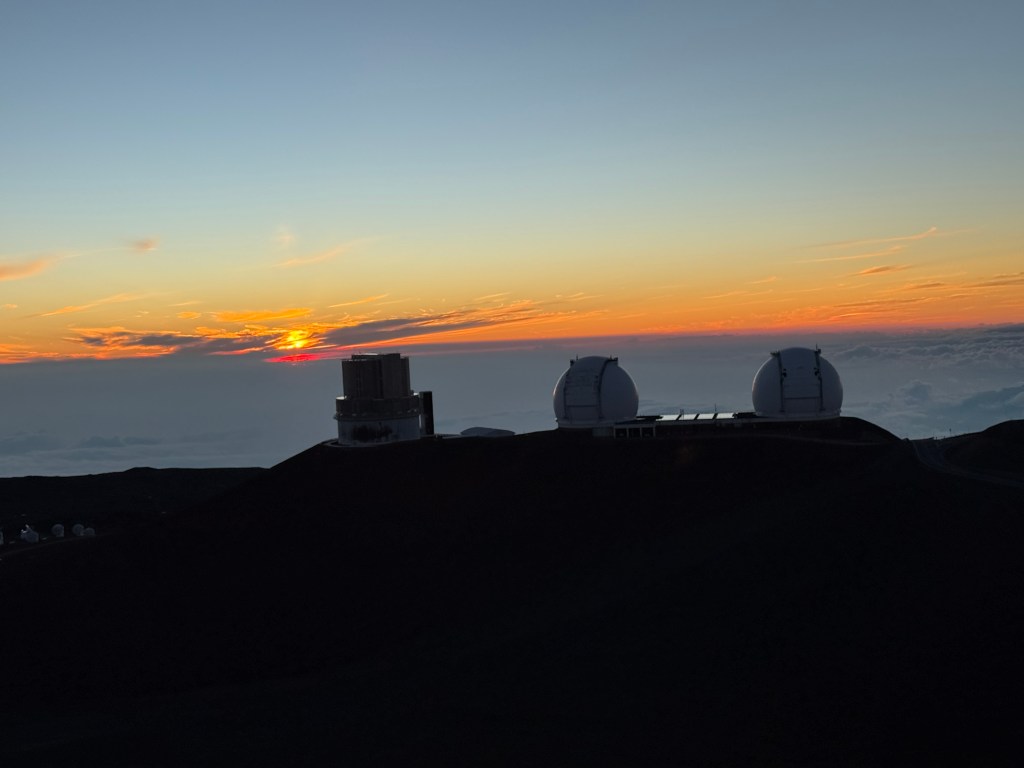
Keck I & II: precision physics in optical and near-infrared
The Keck Observatory’s research identity is “high sensitivity + high resolution.” With two 10-meter segmented telescopes, Keck is built to do projects where you need either extremely faint photons or extremely fine detail, often using adaptive optics.
A huge pillar is black hole and Galactic Center astrophysics. Keck’s AO imaging and spectroscopy helped track stellar orbits around Sagittarius A* and establish the case for a supermassive black hole at the Milky Way’s center (https://www.keckobservatory.org/). Keck is also a major player in exoplanets, especially via spectroscopy that measures radial velocities and atmospheric composition. Instruments like HIRES historically defined an era of Doppler planet detection, while near-IR spectrographs and AO-fed instruments enable detailed follow-up: confirming planets, measuring masses, and probing atmospheres through transmission/emission spectroscopy.
Keck also shines in galaxy evolution and cosmology: measuring redshifts, star-formation rates, and chemical abundances in distant galaxies. In practice, Keck often provides the “ground truth” spectra that convert survey detections into actual physics.
Subaru: wide-field discovery engine + cutting-edge high-contrast imaging
Subaru (8.2 meters) complements Keck beautifully because it is both a powerful general-purpose telescope and a wide-field survey machine. Its most famous recent impact comes from the Hyper Suprime-Cam (HSC) survey program, which images a very large patch of sky deeply and is widely used for weak gravitational lensing, dark matter mapping, galaxy evolution, and discovering distant galaxy clusters (https://subarutelescope.org/).
Subaru is also a major exoplanet and disks telescope through advanced high-contrast systems (for example, SCExAO-related instrumentation and coronagraphy programs), which aim to directly image young giant planets and the structure of protoplanetary disks. Where Keck often specializes in ultra-precise characterization, Subaru is frequently the one that builds the large statistical samples or delivers the wide-field context.
Gemini North: flexible follow-up and time-sensitive astronomy
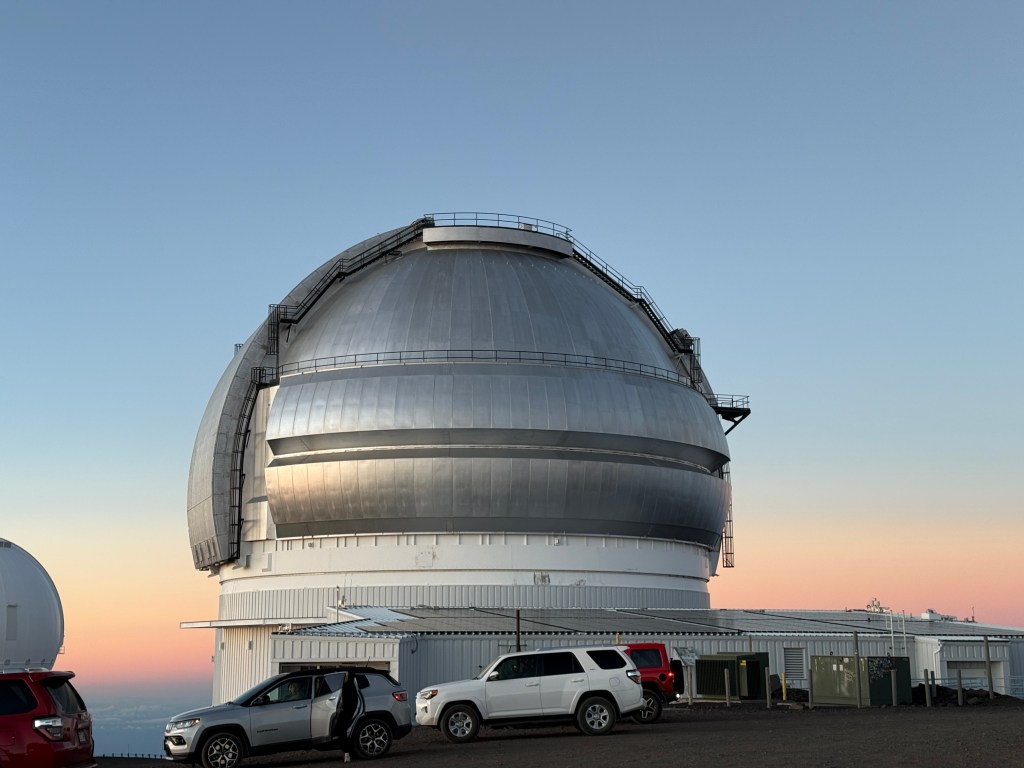
Gemini North (8.1 meters) is part of the international Gemini Observatory and is designed to be highly adaptable, which makes it valuable for rapid response and diverse programs (https://www.gemini.edu/observing/gemini-north). Gemini is often the telescope you want when something changes in the sky and you need spectroscopy or imaging quickly: supernovae, tidal disruption events, variable active galactic nuclei, or time-sensitive follow-up of transient alerts.
Gemini also supports exoplanet science, stellar populations, and galaxy evolution with a range of instruments over time, and it has historically been important for queue scheduling, where observing is matched dynamically to conditions—an underrated advantage on a mountain where weather and seeing can shift fast.
CFHT: surveys and stellar “fingerprints” at scale
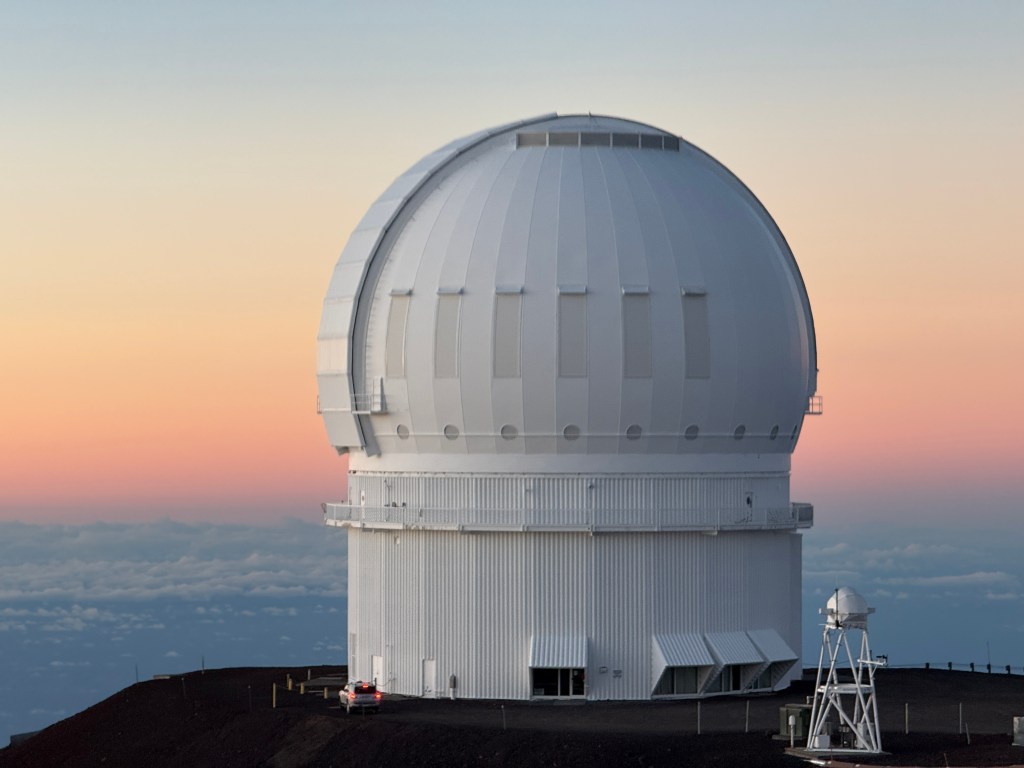
The Canada–France–Hawaii Telescope (3.6 meters) is smaller than Keck/Subaru/Gemini, but it punches above its weight because it excels at large surveys and precision measurements that don’t require an 8–10 meter aperture (https://www.cfht.hawaii.edu/).
CFHT has been central to wide-field imaging (MegaCam era) for studies like weak lensing, Kuiper Belt object searches, and mapping stellar populations. It has also become famous for high-precision spectroscopy in the exoplanet context (for example, SPIRou programs in the near-infrared), which targets low-mass stars where planets are easier to detect via Doppler wobble. In the Mauna Kea ecosystem, CFHT often acts as a “catalog generator” and a precision follow-up facility for specific stellar targets.
IRTF: the Solar System telescope
The NASA Infrared Telescope Facility (IRTF, 3.0 meters) has a very distinct mission: it is optimized for planetary science and time-domain observing of objects in our own Solar System (https://irtfweb.ifa.hawaii.edu/). When people think “astronomy,” they often picture galaxies, but IRTF is where you go to measure the composition of an asteroid, track changes in a comet’s coma, monitor storms on Jupiter, or study volcanic and atmospheric variability on Io and Titan.
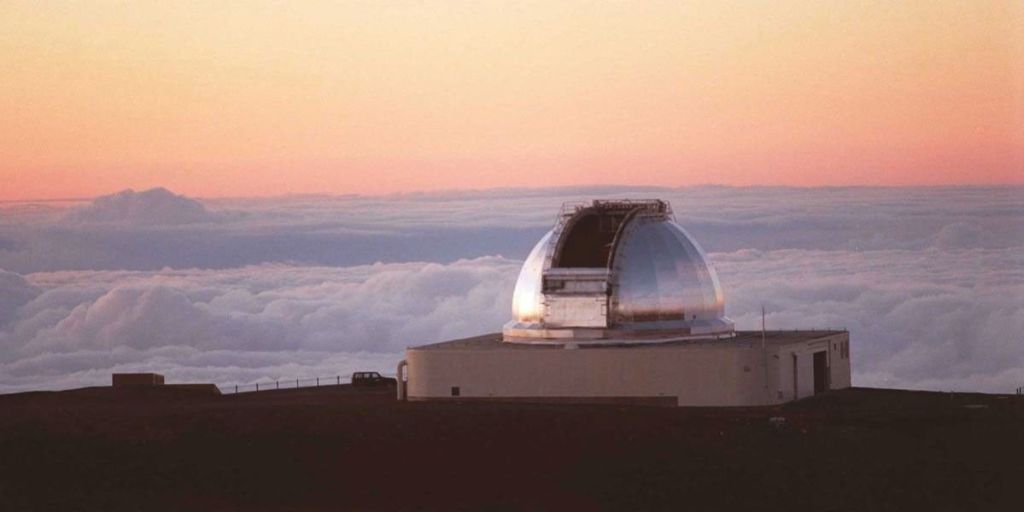
IRTF’s role is especially important because Solar System targets change quickly. You don’t just “schedule Neptune” and assume it’s the same next month; you monitor weather, seasonal chemistry, impacts, and rotation-dependent features. Mauna Kea’s dry air is crucial here because many of the relevant molecular absorption/emission features sit in infrared windows that are sensitive to water vapor.
UKIRT: near-infrared surveys through dust
UKIRT’s legacy and ongoing value are strongly tied to near-infrared sky surveys and studies that require seeing through dust (https://about.ifa.hawaii.edu/facilities/ukirt/). Near-IR is a sweet spot for mapping the Milky Way’s structure, finding embedded young stars, and identifying cool objects like brown dwarfs.
UKIRT-type surveys provide essential target lists for deeper spectroscopy at Keck/Subaru/Gemini. If Keck is the microscope, UKIRT has often been the wide-angle scanner that tells you where the interesting biology is.
JCMT and SMA: cold dust, molecular gas, and star formation “in progress”
In the submillimeter and millimeter regime, Mauna Kea lets you study the cold universe: dust grains and molecules that are invisible or ambiguous in optical light.
JCMT (15 meters) focuses heavily on mapping cold dust emission and molecular clouds, building statistical views of star formation across the Milky Way and beyond (https://www.eaobservatory.org/jcmt/). The Submillimeter Array (SMA) brings interferometry into the picture, achieving higher angular resolution by combining multiple dishes (https://www.cfa.harvard.edu/sma/). Together, facilities like these address questions such as: Where are stars forming right now? How do disks evolve? How do molecular outflows inject turbulence back into clouds? What is the dust content of distant galaxies?
These wavelengths are also part of the broader “black hole imaging” story via VLBI networks; Mauna Kea’s geographic location is valuable for long baselines across the Pacific, which helps sharpen Earth-sized interferometric arrays.
UH telescopes and specialized facilities: training, instrumentation, and niche science
Mauna Kea also hosts University of Hawaiʻi facilities such as the UH 2.2m and other specialized instruments that contribute to steady science output, student training, and instrument development. These telescopes often support long-term monitoring programs, targeted spectroscopy, and technology demonstrations that later scale up to larger observatories.
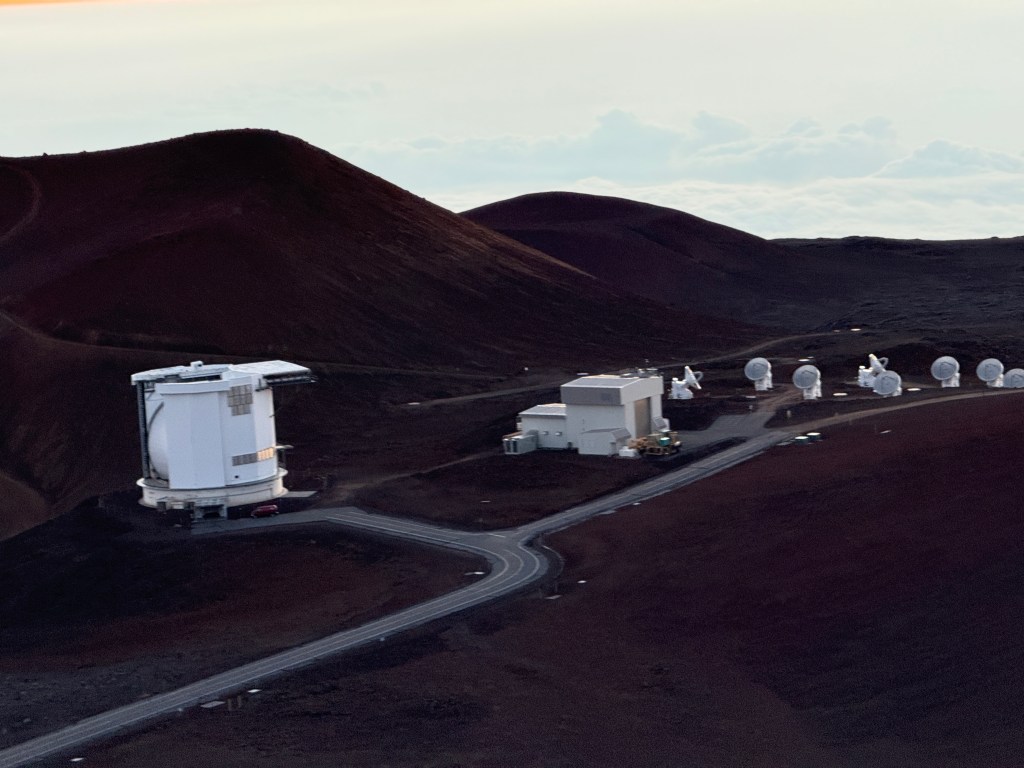
One mountain, one research pipeline
What makes Mauna Kea scientifically powerful isn’t just that it has big telescopes. It’s that it supports a pipeline of discovery. Wide-field surveys (Subaru/CFHT/UKIRT) find rare objects and build statistical samples. Flexible follow-up (Gemini) reacts to transients and fills in missing data quickly. Precision giants (Keck/Subaru/Gemini) do the deep spectroscopy and high-resolution imaging that turns “a dot” into a physical model. Submillimeter and millimeter facilities (JCMT/SMA) reveal the cold dust and gas that optical telescopes can’t see. And Solar System-focused observing (IRTF) keeps planetary science connected to real-time change.
Visiting as a student interested in engineering made this feel like a systems problem: each observatory is a specialized sensor, and the summit is the integrated sensor network. The universe is complicated enough that you rarely get the full story from one wavelength or one technique. Mauna Kea’s research focus, taken as a whole, is exactly that—building the full story from many imperfect but complementary ways of seeing.
 Astronomer Willy
Leave a comment