
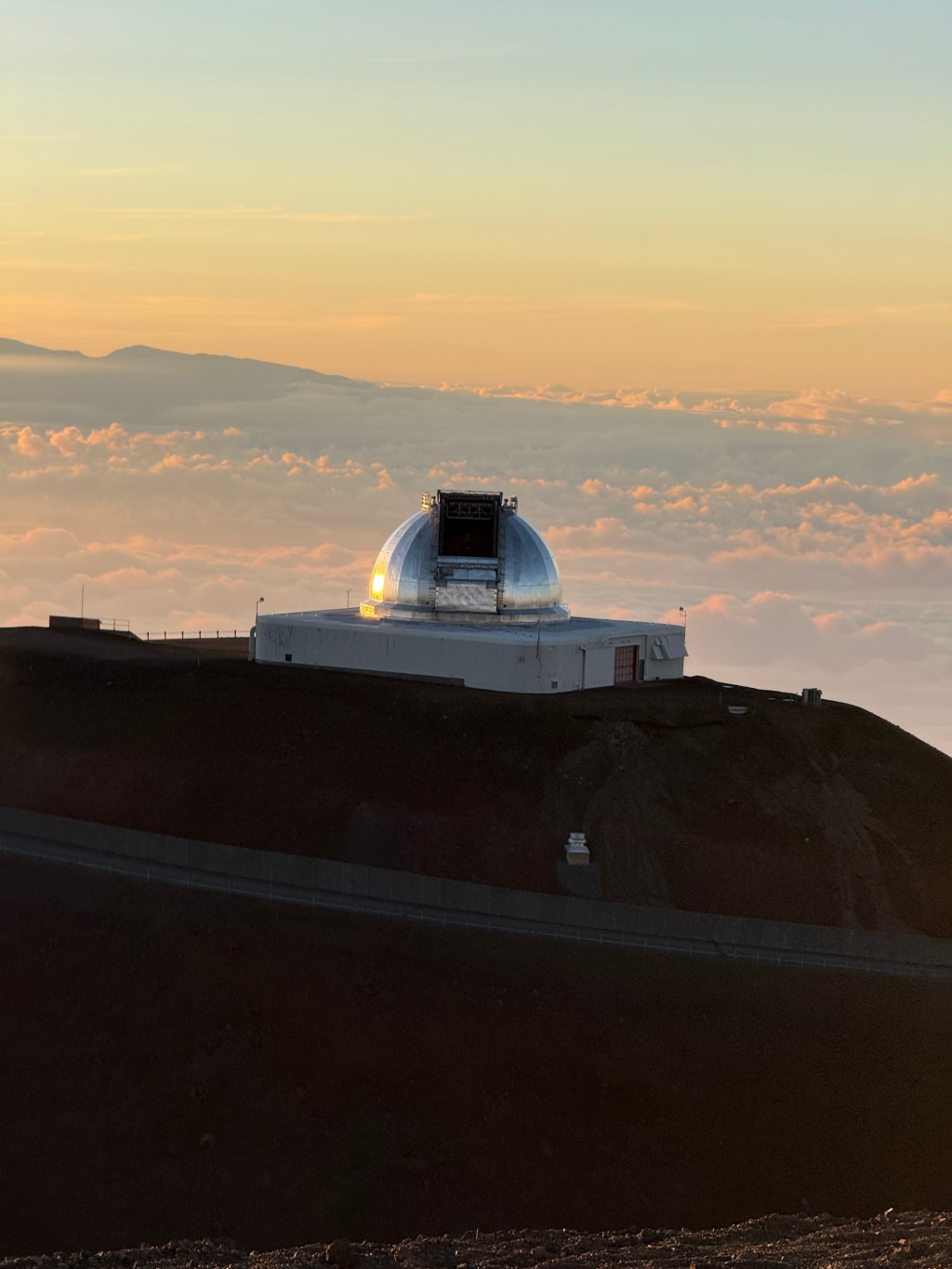
The first time you drive up the long road on Hawaiʻi Island toward Mauna Kea, it feels like you’re leaving Earth in stages. The landscape shifts from coastal greens to stark lava fields, and then an otherworldly summit appears with white domes scattered across the ridgeline. What struck me most wasn’t just the scenery. It was the idea that this mountain became one of humanity’s most important “interfaces” with the universe: a place where geology, atmosphere, technology, and people all collide.
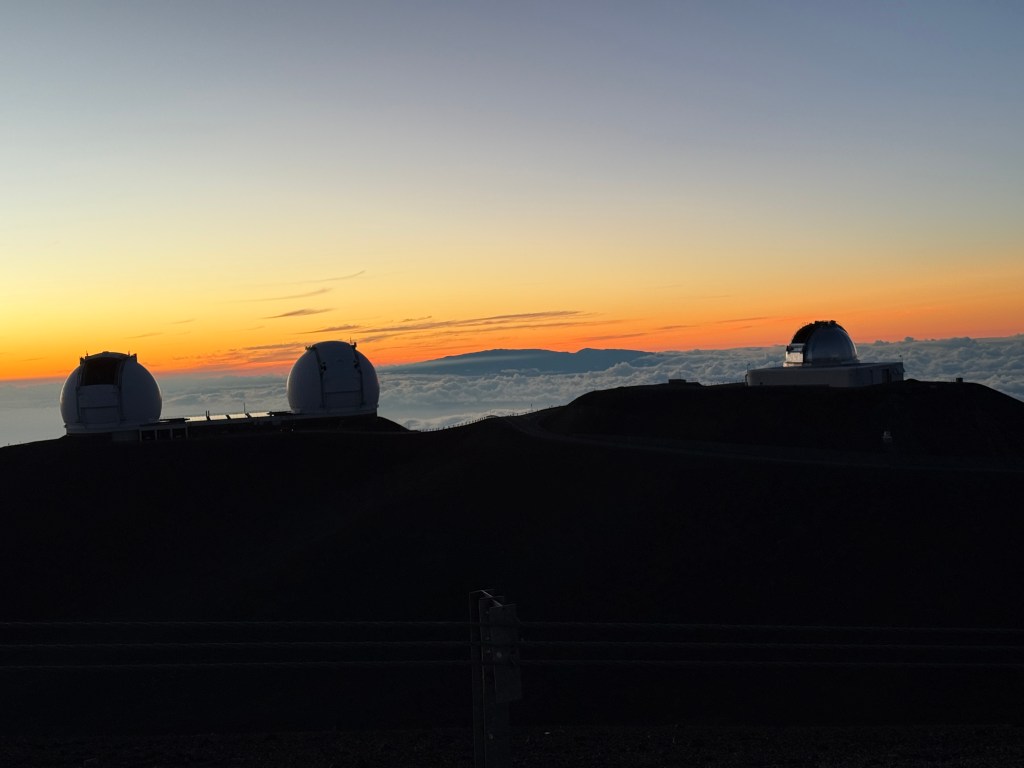
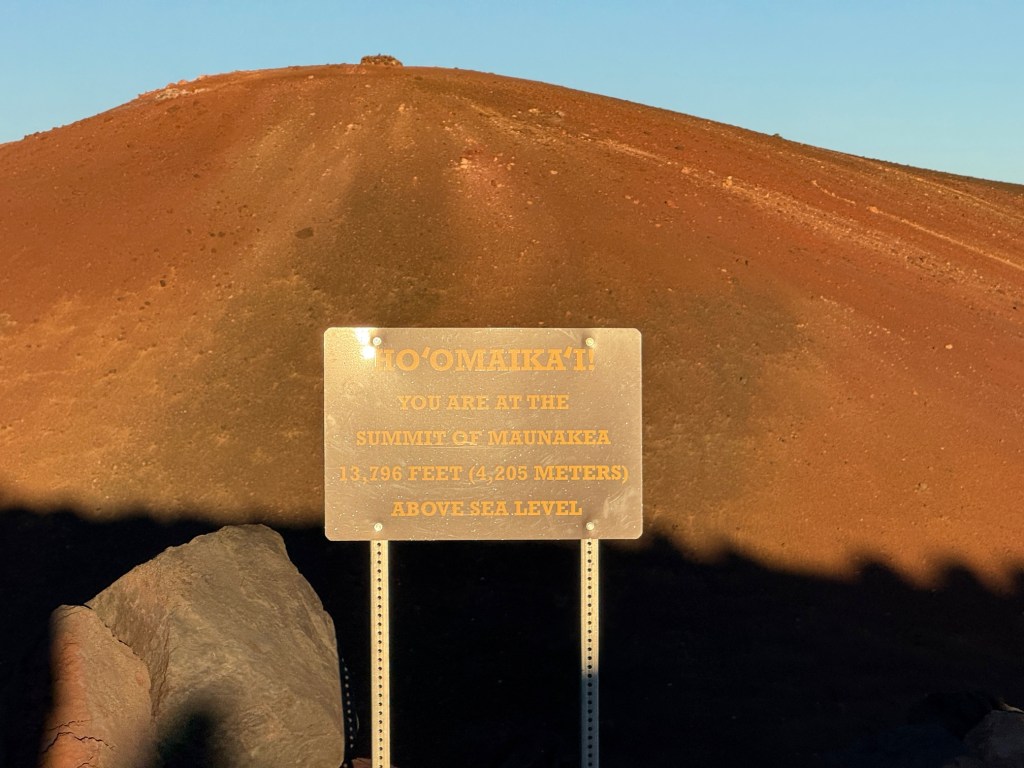
Mauna Kea’s observatories exist because the mountain is a near-perfect site for astronomy. At roughly 4,200 meters (about 13,800 feet), the summit rises above much of the water vapor in the atmosphere, which is especially important for infrared and submillimeter observations. The air is often stable, with relatively low turbulence, producing excellent “seeing” (astronomers’ term for how steady the atmosphere is, and therefore how sharp stars appear). The location in the middle of the Pacific provides dark skies far from most sources of light pollution, and the high altitude reduces atmospheric absorption. In short: Mauna Kea is a natural amplifier for telescopes, making every mirror and instrument more powerful than it would be at sea level.
But this wasn’t inevitable. Mauna Kea also holds deep cultural and spiritual significance in Native Hawaiian traditions, and the story of astronomy on the mountain is inseparable from the story of land use, stewardship, and conflict. Any honest introduction has to keep both truths in frame: Mauna Kea is a premier site for astronomical discovery, and it is also a place where decisions about science, governance, and respect for Indigenous rights have been contested.
How did Mauna Kea become an astronomy mountain?
Modern astronomy on Mauna Kea began in the mid-20th century, when scientists started systematically identifying the best sites on Earth for high-altitude observations. A key figure in Mauna Kea’s early development was astronomer Gerard Kuiper, who helped evaluate the summit’s potential for infrared astronomy. Another major force was University of Hawaiʻi astronomer John Jefferies, who pushed for serious site testing and for building the institutional capability to operate world-class telescopes from Hawaiʻi. The earliest projects were modest by today’s standards, but they proved the central point: if you put a telescope above a lot of Earth’s atmosphere, you get access to a clearer universe.
This momentum led to the creation and expansion of what we now call the Mauna Kea Observatories (MKO), a cluster of independent facilities operated by international partnerships. Over time, Mauna Kea became a kind of “astronomy port,” where multiple institutions chose to build domes near one another because the site itself was so valuable. That clustering also created shared infrastructure needs such as roads, power, communication, safety operations, and environmental monitoring. All of this put together accelerated the transformation of the summit into a heavily instrumented landscape.
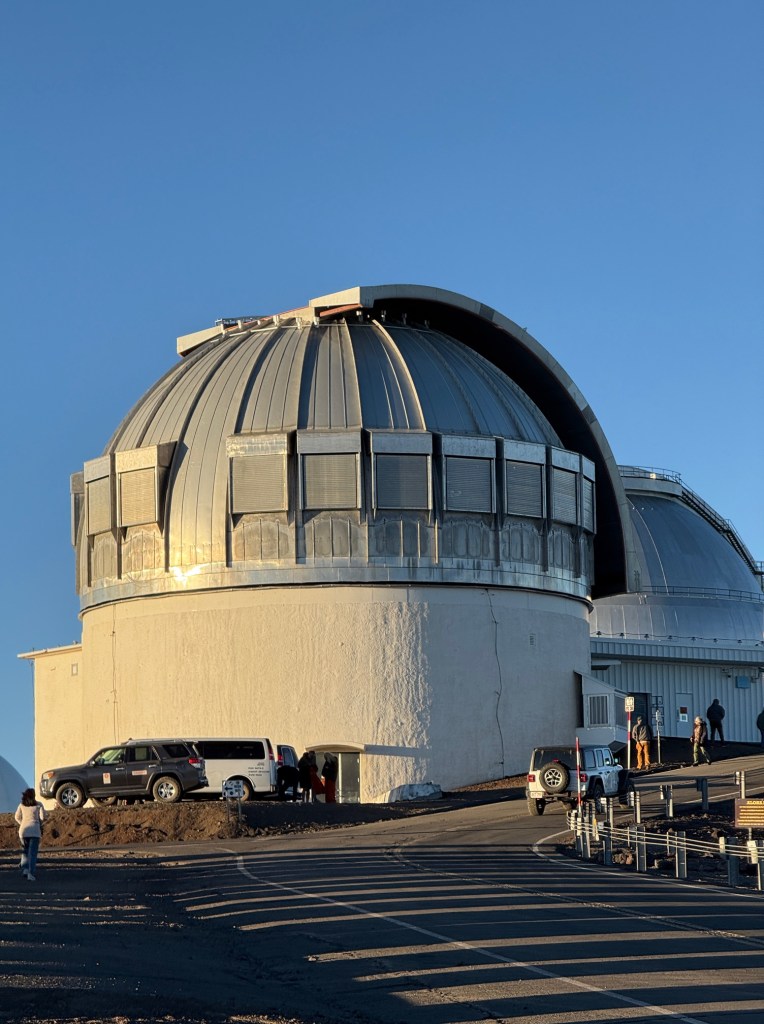
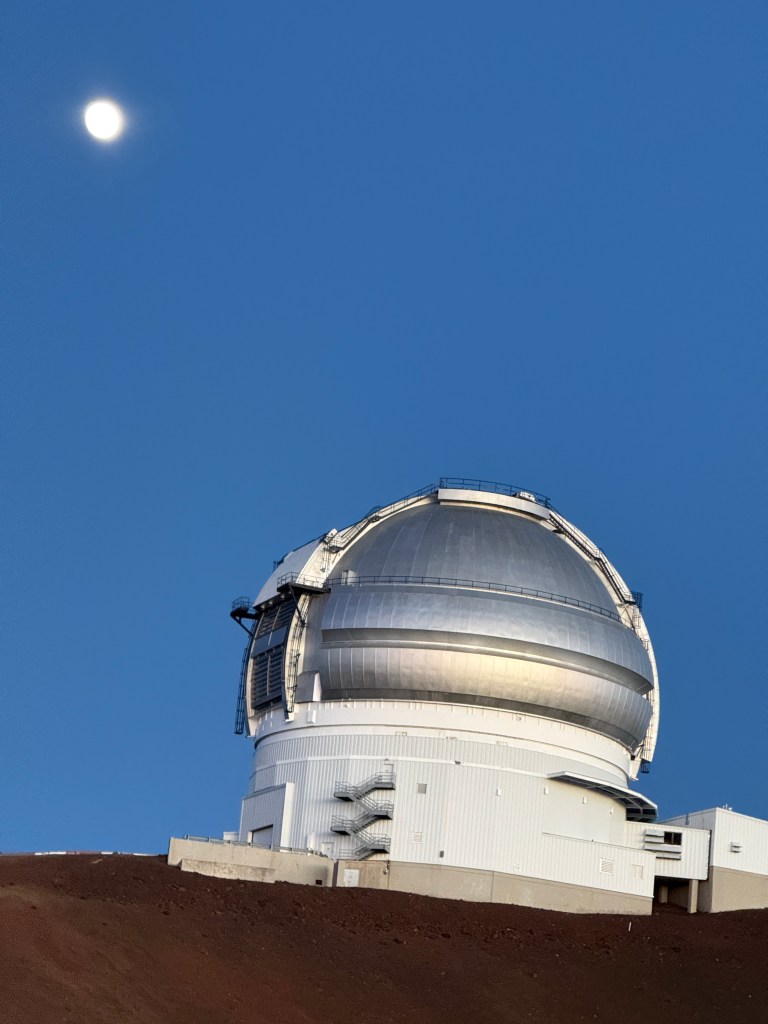
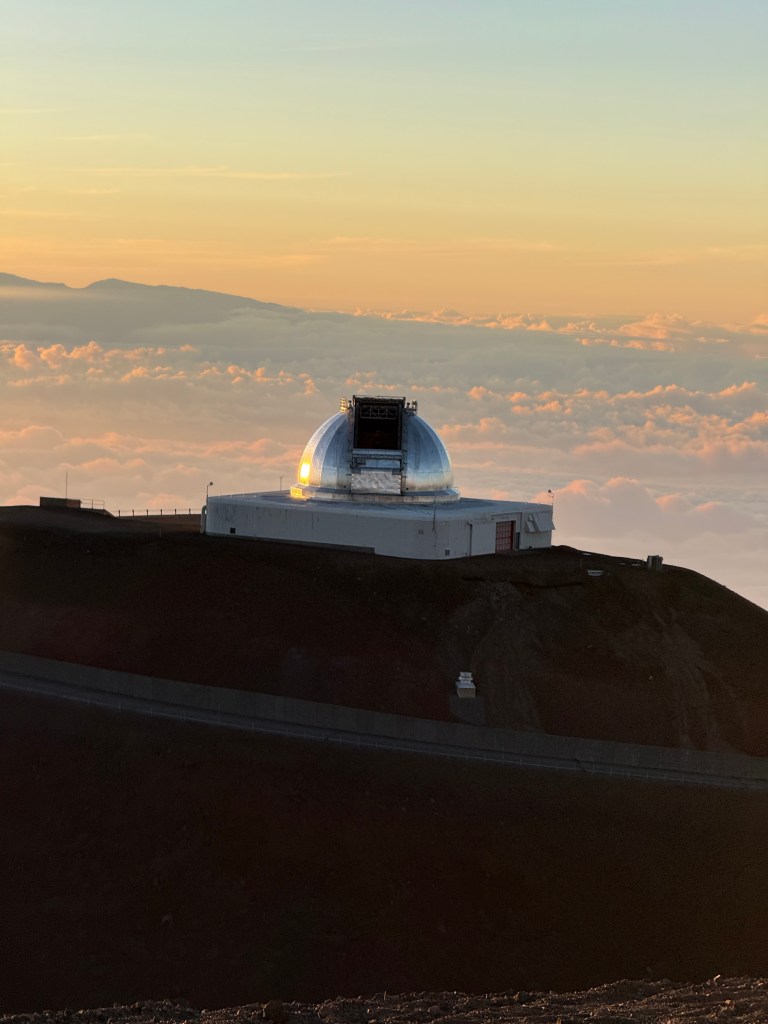
One of the most visible symbols of Mauna Kea’s rise is the sheer variety of domes. Each one represents a different era of technology, funding model, and scientific goal. Some telescopes were designed when photographic plates were still common; others are tuned for modern detectors, adaptive optics, and high-resolution spectroscopy. The mountain became, in effect, a timeline of astronomical engineering.
The people and ideas behind the observatories
It’s easy to think of observatories as static buildings, but the real story is human: the scientists who wanted darker skies, the engineers who figured out how to keep delicate instruments stable in extreme conditions, the technicians who operate facilities night after night, and the local communities affected by every new proposal.
The rise of Mauna Kea coincided with major changes in astronomy itself. In the second half of the 20th century, astronomy transitioned from “astronomer with a telescope” to a deeply collaborative, instrument-driven science. Detectors improved dramatically. Infrared astronomy moved from niche to essential. Computing changed how data could be recorded and analyzed. If you want to understand why Mauna Kea attracted big projects, it’s because it arrived at the right time: when better sites and better technology could combine to make entirely new kinds of observations possible.
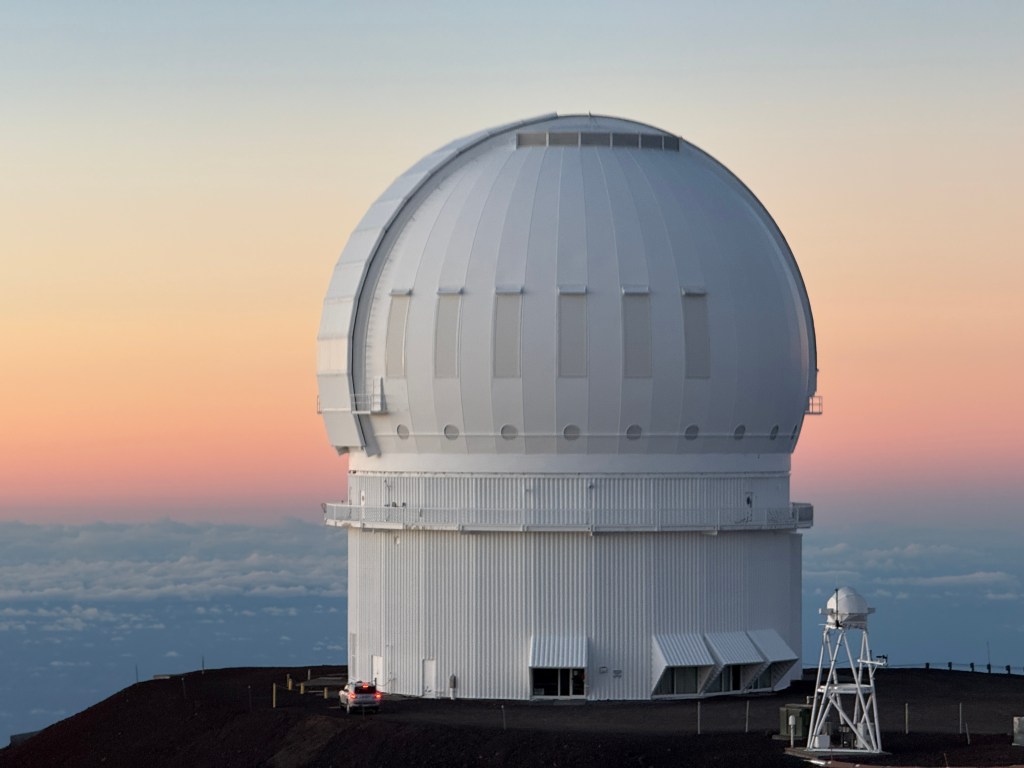
This was also the era when astronomy became more international. The cost of building and operating a large telescope is enormous, and Mauna Kea encouraged partnerships: universities, national observatories, and consortia pooling resources for shared access to some of the best observing conditions on Earth. This model culminated in facilities like the W. M. Keck Observatory, which would later become famous for its twin 10-meter telescopes and its role in discoveries ranging from exoplanet characterization to the study of the Milky Way’s central black hole (I’ll save the Keck deep dive for my second post).
What “building an observatory” actually means on Mauna Kea
An observatory is more than a mirror. It’s a system designed to control errors. At sea level, turbulence blurs starlight; at the summit, the air is steadier, but challenges remain. Wind shake can smear images, so domes and telescope structures are designed for stiffness and damping. Temperature differences create local turbulence, so thermal control matters—sometimes down to managing how equipment vents heat into the night air. And because Mauna Kea is so high, everything is impacted by the environment: human performance (altitude sickness is real), mechanical wear, logistics, and safety.
As I visited, I kept thinking about how much of astronomy is actually precision engineering. A telescope is a machine for turning photons into numbers. The dome is a machine for protecting that machine while still letting it see. The instruments—spectrographs, imagers, adaptive optics systems—are machines for extracting information from light. If you’re interested in rockets or spacecraft, Mauna Kea feels familiar: it’s another place where you design for extremes and chase fractions of a percent in performance.
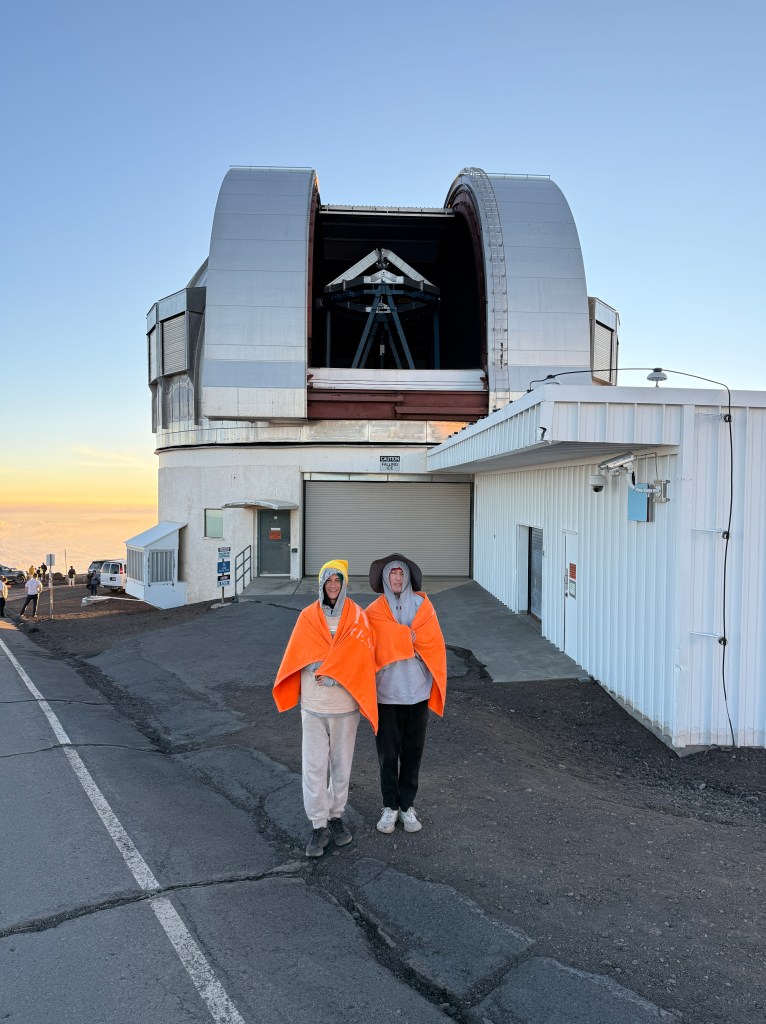
Below is the obligatory photo of me and my brother freezing in front of the telescope.
A brief timeline of how Mauna Kea grew
The development began with early site testing and smaller telescopes that validated the summit’s potential. In the following decades, larger facilities arrived as global astronomy budgets and ambitions expanded. Each new project raised the bar for what was scientifically possible, but also raised questions about cumulative impact. The summit’s identity shifted from a remote volcanic peak to a world hub for optical, infrared, and submillimeter astronomy.
The governance and stewardship model also evolved over time. Management of access, environmental oversight, and cultural considerations became central issues, not side notes. Controversies around proposed expansions—especially in more recent decades—have become part of the public identity of Mauna Kea astronomy. For visitors like me, that means you can’t treat the observatories as isolated marvels. They’re embedded in real debates about how society chooses to pursue knowledge, and who gets to decide what “progress” looks like on a sacred landscape.
Why Mauna Kea matters (even if you never do astronomy)
Standing near the summit, you feel something rare: a direct connection between a place on Earth and the farthest questions humans ask. How do stars form? What are galaxies made of? How do planetary systems evolve? What is the chemistry of distant worlds? Those questions sound abstract until you realize that the data come from physical instruments in physical places, built by teams of people, operating under constraints, budgets, and ethics.
Mauna Kea is a reminder that science isn’t only about equations or computer code—it’s about institutions, collaboration, and responsibility. The observatories are extraordinary achievements of engineering and international partnership. They are also a case study in how difficult it is to balance scientific opportunity with cultural respect and environmental stewardship.

 Astronomer Willy
Leave a comment